Citizen Mobility App for Sustainable Urban Mobility
Discover how digital tools empower citizens and promote sustainable mobility – apply innovative approaches to encourage greener travel choices and active participation.
Course overview
This e-course introduces participants to the SPINE Citizen Mobility App, a digital platform developed within the SPINE Project. The app empowers citizens to actively participate in urban mobility innovation, supports behavioral change toward sustainable transport, and helps cities gather valuable mobility data.
Participants will explore how the app acts as a community hub, travel logger, and incentive platform, enabling citizens to engage in mobility co-creation, share feedback, and adopt sustainable travel behaviors. The course also presents real-world implementations in SPINE Living Labs, illustrating how cities deploy the app to promote public transport, active mobility, and citizen participation.
Through case studies, participants will learn about deployment strategies, incentive mechanisms, safety features, and evaluation methods used to support climate-neutral mobility goals.
The course emphasizes the role of digital tools in supporting Sustainable Urban Mobility Plans (SUMPs) and enabling cities to implement participatory mobility solutions.
Target Audience
This e-course is designed for:
- Urban mobility planners and transport managers
- Public transport operators and city authorities
- Researchers in smart cities and behavioral change
- Students and professionals in sustainable transport and mobility systems
- Smart city innovation practitioners and Living Lab coordinators
Learning Objectives
- By the end of this module, learners will be able to:
- Explain the purpose of the SPINE Citizen Mobility App.
- Describe how the app supports citizen participation and sustainable travel behavior.
Module Topics
- SPINE project goals and climate-neutral mobility
- The Citizen Mobility App as a digital participation platform
- Role of citizens in SPINE Living Labs
- Benefits of mobility data for cities
Key Concepts and Content
- Citizen App as a Community Hub
The SPINE Citizen Mobility App enables citizens to actively participate in shaping urban mobility solutions by connecting them with city authorities and other users. The app serves as a platform for community interaction and co-creation, allowing citizens to share experiences, propose solutions, and contribute feedback.
- Living Lab Participation
Within the SPINE Living Labs, the app supports participatory innovation, where citizens provide insights on implemented solutions and participate in mobility experiments.
- Benefits for Cities
The application generates valuable insights for city authorities by collecting both quantitative mobility data and qualitative citizen feedback, helping cities evaluate the impact of transport policies and improve services.
- Contribution to Sustainable Mobility
The app encourages sustainable travel behavior and shifts toward:
- Public transport
- Walking
- Cycling
- Shared mobility services
This behavioral change contributes to reduced congestion, lower emissions, and more efficient urban mobility systems.
👉 Reflection Question
What are the main barriers preventing citizens in your city from adopting sustainable transport modes?
Learning Objectives:
By the end of this module, learners will be able to:
- Identify the main features of the Citizen Mobility App.
- Explain how digital incentives and gamification support behavioral change.
- Describe how the app facilitates communication between cities and citizens.
Module Topics
- Personal Travel Logger
- Micro-Incentives Program
- Central Communication Hub
- Safety and incident reporting tools
- Gamification features and user engagement
- Integration with other smart mobility services
Key Concepts and Content
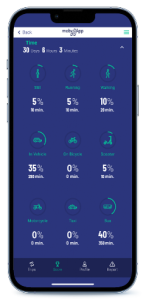
The Travel Logger automatically tracks travel modes such as walking, cycling, driving, and public transport. It provides personalized insights including travel distance, carbon emissions, and calories burned, helping users understand and improve their mobility habits.
The feature is optional and fully compliant with the EU GDPR, ensuring users have full control over their personal data.
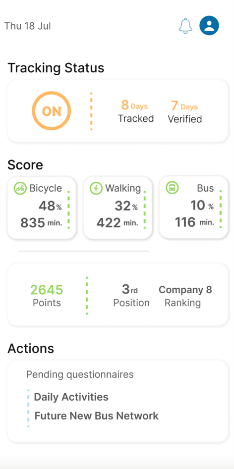
The SPINE app incorporates behavioral economics and gamification principles to encourage sustainable travel choices. Small incentives motivate users to choose public transport and active mobility options.
Examples include:
• Points for public transport trips
• Discounts or rewards from local businesses
• Mobility challenges
• Prize lotteries for sustainable travel participation
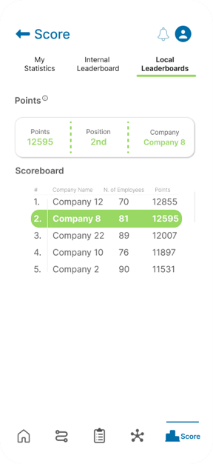
Gamification increases engagement through:
- Challenges (e.g., use public transport three days consecutively)
- Badges and achievements
- Friendly competition among users
The app acts as a central communication channel where citizens can receive updates, share feedback, and discuss mobility solutions with local authorities.
Incident Reporting and Feedback
Users can submit:
- complaints or suggestions
- reports about unsafe infrastructure
- feedback about city mobility services
This supports data-driven decision-making for transport authorities.
👉 Reflection Question
Which feature would most motivate citizens in your city: incentives, travel insights, gamification, or communication tools?
Learning Objectives:
- By the end of this module, learners will be able to:
- Describe the safety features included in the Citizen Mobility App.
- Understand how the app integrates with other smart city mobility services.
- Recognize the role of digital platforms in improving urban safety.
Module Topics
- Panic button and emergency alerts
- Incident reporting and safety notifications
- Travel buddy feature
- Integration with smart mobility platforms and existing apps
Key Concepts and Content
- Safety Features
The SPINE Citizen App includes several safety tools designed to improve user security during travel.
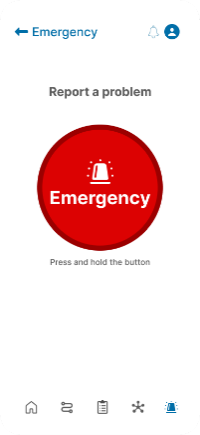
- Panic Button
In emergencies, users can activate a panic button that sends their real-time location to local authorities, enabling rapid response.
- Incident Reporting
Users can report harassment, accidents, or dangerous situations directly through the app. These reports help authorities identify safety hotspots and improve infrastructure planning.
- Safety Notifications
The app can notify users about potential risks such as unsafe areas or extreme weather conditions and suggest safer travel routes.
- Travel Buddy
Users can share their live location with trusted contacts during their journey, providing an additional safety layer.
- Integration with Smart Mobility Services
The Citizen App is designed to integrate existing mobility solutions and services, including systems already deployed by cities or developed by other SPINE partners.
Integration approaches may include:
- API connections with city mobility platforms
- Deeplinks to existing transport apps
- Shared interface designs
- A centralized “all-in-one” platform combining multiple services
This flexibility allows cities to adapt the app to their local digital ecosystem.
👉 Reflection Question
How could safety features and incident reporting improve mobility in your city?
Learning Objectives:
- By the end of this module, learners will be able to:
- Identify key performance indicators (KPIs) for evaluating the Citizen Mobility App.
- Understand how mobility data supports policy and infrastructure planning.
- Recognize the importance of citizen feedback in mobility innovation.
Module Topics
- Mobility data collection
- Key performance indicators
- Impact assessment
- Feedback loops for improvement
Key Concepts and Content
- Data-Driven Mobility Planning
The app generates real-time mobility data, allowing cities to better understand travel patterns and evaluate mobility interventions.
Example KPIs
- Number of active users
- Public transport usage
- Share of sustainable trips
- CO₂ emissions reduction
- Participation in incentive programs
- Citizen engagement and feedback
- Impact Assessment
Collected data supports the evaluation of SPINE Living Lab solutions, enabling continuous improvement of mobility policies and services.
- Feedback Loops
User feedback gathered through surveys, reports, and discussions enables cities to refine:
- mobility services
- incentive programs
- digital features and usability
Case studies: Bologna
Case Study 1: Barreiro – Data-Driven Mobility Planning
In Barreiro, the Citizen Mobility App was primarily deployed as a travel logger tool to generate detailed insights into commuting and parking behavior. A key focus is on trips connecting Barreiro to Lisbon, particularly via the Ferry Boat Terminal.
Key Objectives
- Capture real-world travel behavior data
- Understand commuting patterns and parking demand
- Support evaluation of new mobility interventions
Role in Activity-Based Modeling (ABM)
The collected data feeds into an Activity-Based Model (ABM). This model enables:
- Simulation of daily activity patterns of residents
- Analysis of mode choice and trip chains
- Understanding of parking demand and cruising behavior
- Exploration of relationships between parking and secondary activities
Impact on Mobility Solutions
The integration of travel logger data and ABM directly supports the optimization of Park & Ride (P&R) facilities and Express bus services
Using granular data, the city can:
- Identify high-demand corridors and peak travel times
- Strategically locate P&R infrastructure
- Tailor public transport services to actual commuter needs
The app also collects user feedback, providing qualitative insights into Satisfaction with implemented measures and Areas for improvement
- This enables iterative, evidence-based mobility planning.
- Case Study 2: Valladolid – Citizen Engagement & Co-Creation
In Valladolid, the Citizen Mobility App is positioned as a communication and engagement platform, supporting participatory mobility planning.
In Valladolid, the Citizen Mobility App has been customized and adapted to reflect the city’s specific mobility policy objectives, combining citizen engagement, behavioral nudging, and real-time information services.
Key Objectives
- Foster citizen participation in mobility planning
- Enable co-creation of solutions
- Align strategies with real user needs
Core Functionalities: the app acts as a central hub for:
- Surveys and questionnaires
- Event and workshop notifications
- User feedback collection
- These features empower citizens to actively contribute to shaping urban mobility policies.
Enhanced User Engagement Features
Additional features support everyday mobility decisions:
Personalized traffic updates
Bike-sharing availability notifications
Context-aware travel suggestions
While secondary, these features demonstrate the app’s broader potential to: influence travel behavior choices and promote sustainable mobility practices
🌱 Strategic Value
By combining engagement and data collection, city of Valladolid could 1)gain actionable insights into citizen preferences 2) Improve acceptance of mobility measures 3) Build a more inclusive and user-centered transport system
- Žilina:
👉 Reflection Question
Which type of data would be most useful for improving mobility planning in your city?
Learning Objectives
- By the end of this module, learners will be able to:
- Identify best practices for deploying citizen mobility apps.
- Recognize strategies for scaling digital mobility platforms.
- Understand the broader impact of citizen engagement on urban mobility.
Module Topics
- Best practices from SPINE pilots
- Stakeholder engagement strategies
- Expanding incentive partnerships
- Scaling mobility platforms across cities
Key Concepts and Content
- Key Benefits of the Citizen App
The SPINE Citizen Mobility App delivers multiple benefits:
- Encourages sustainable travel behavior
- Enhances communication between citizens and city authorities
- Improves public safety
- Provides rich data for mobility planning
- Strengthens citizen participation in urban innovation
- Best Practices
Successful deployment strategies include:
- strong stakeholder partnerships
- multi-channel outreach campaigns
- continuous iteration and feedback
- collaboration with local businesses for incentives
👉 Reflection Question
What partnerships (e.g., businesses, universities, NGOs) could help expand sustainable mobility incentives in your city?